A feeling everyone knows: you’re traveling, stopping in a cozy little town or at a scenic viewpoint, taking your first cup of coffee in the morning — and it tastes as if it were the best coffee of your life. Does the taste really change? Or is it something deeper — sensations, emotions, and memories?
Emotions and taste: what science says
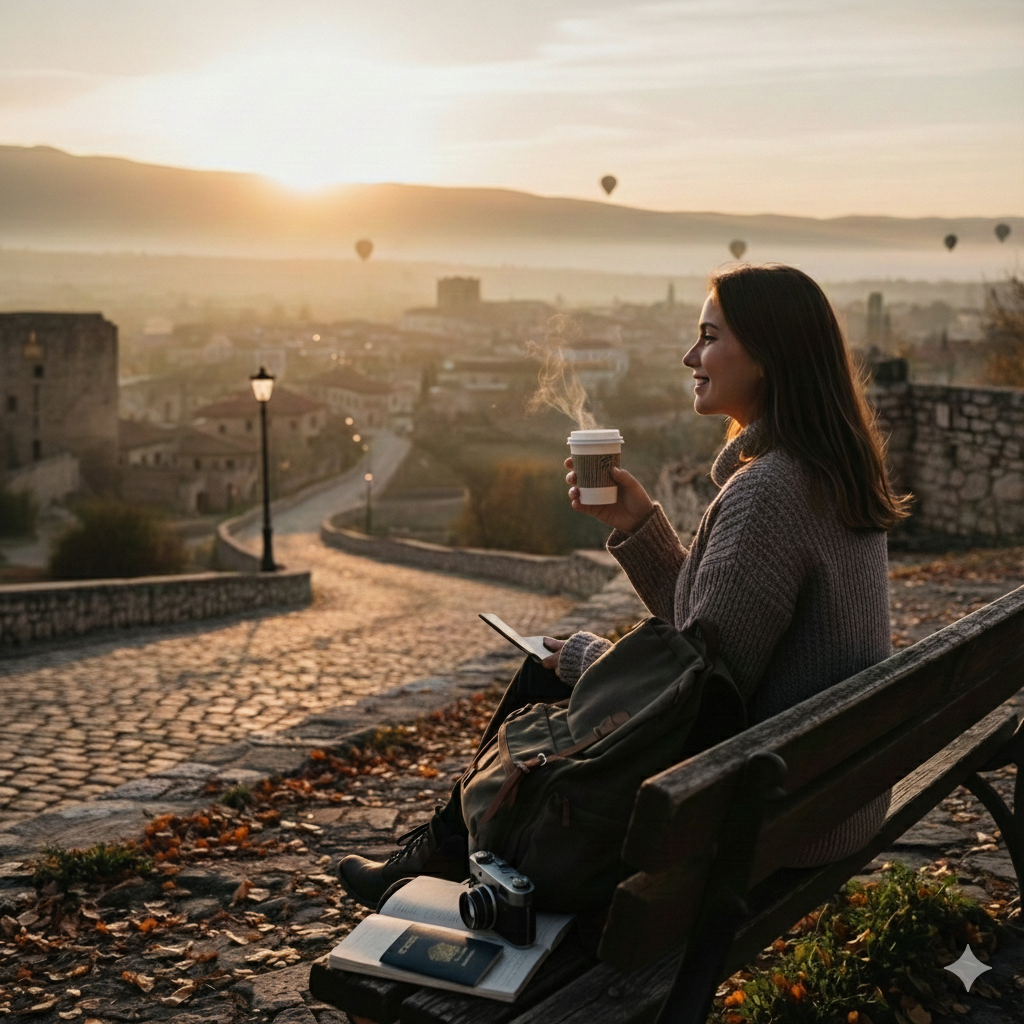
One of the key reasons why coffee tastes better while traveling is the close connection between coffee flavor and emotions. Our taste receptors are tightly linked to the emotional centers of the brain. When we feel joy, freedom, or curiosity, these positive emotions enhance our perception of flavor. Research in gastropsychology confirms that when a person is in a good mood, food and drinks seem tastier — even if their chemical composition remains exactly the same.
This phenomenon is explained by the activation of the limbic system — the part of the brain responsible for emotions and memory. So when you enjoy a cup of coffee on a terrace overlooking mountains or the sea, your brain “highlights” every note with positive feelings, making the coffee truly taste brighter and richer.
New impressions — new taste standards
Travel is always a step out of the comfort zone: new places, people, and aromas. In such moments, the brain intensifies memory formation in order to capture new experiences. When you drink coffee in an unfamiliar setting, a synergy emerges between taste and new impressions — and this combination is stored in memory as something unique.
This explains why coffee that might seem “ordinary” at home is perceived completely differently while traveling. That is exactly why coffee tastes better on trips — it’s not only about the quality of the beans, but about the entire context in which you drink it.
Gastropsychology: how context changes taste
Gastropsychology studies how the context of consumption influences taste perception. Here are a few factors that make coffee while traveling especially enjoyable:
-
Surrounding atmosphere. The sea, mountains, street cafés overlooking historic centers — all of this creates an emotional backdrop that enhances flavor.
-
Expectation and novelty. Being in a new place, we anticipate unforgettable moments, and even the taste of coffee becomes richer because of this expectation.
-
Social connections. We often drink coffee while traveling with friends or new acquaintances, and these social bonds add emotions that stay in our memory.
Together, these elements create an effect where coffee feels more intense, aromatic, and pleasurable than in everyday routine.
Coffee and memories: how a moment turns into a lasting taste
One of the most fascinating aspects is coffee and memories. While traveling, every small detail can matter: the sound of waves, fresh air, a conversation with a local barista. These moments become imprinted in memory along with the taste of your coffee. Even after returning home, a familiar aroma or flavor can instantly take you back to that moment.
Psychologists call this the effect of contextual memory: taste activates memories of a place and the emotions experienced there. That’s why it can sometimes be difficult to “recreate” the same flavor at home — because the entire travel context is missing.
Conclusion: more than just a drink
So, the answer to the question of why coffee tastes better while traveling is not only about bean quality or drink temperature. It’s about emotions, context, atmosphere, and memories that accompany every cup. When you enjoy coffee in a new city or at the edge of the world, your brain fills that taste with vivid sensations, amplifying the pleasure.
And even after you return home, you can relive those pleasant moments by choosing quality coffee from a coffee producer that helps you create your own story of taste and emotions. Because real coffee is not just a drink — it’s a key to memories and new experiences.