Properly selected water is half the success of a perfect cup. Even the best beans from a coffee producer will not reveal their potential if the water has incorrect hardness, pH, or mineral composition. In this article we will examine which water is best for espresso, how filters work, why hardness is important, and what modern studies show.
Why water is a key ingredient in making coffee
On average, water makes up 92–98% of the finished drink. It extracts flavor compounds, affects acidity, sweetness, texture, and aroma. An incorrect mineral balance can make the drink empty, too acidic, or bitter.
That is why specialists from the SCA (Specialty Coffee Association) back in 2017 formed standards for water, highlighting key indicators:
Total hardness — 50–175 ppm
Alkalinity — 40 ppm
pH of water for coffee — 6.5–7.5
These figures were later confirmed by new experiments, including tests at MIT and Barista Hustle water studies.
Water hardness: how it changes the taste of coffee
What is hardness?
Hardness is the amount of calcium and magnesium.
Too soft water → excessive acidity, flat taste.
Too hard water → bitterness, “heavy” taste, rapid scale formation.
Practical tests
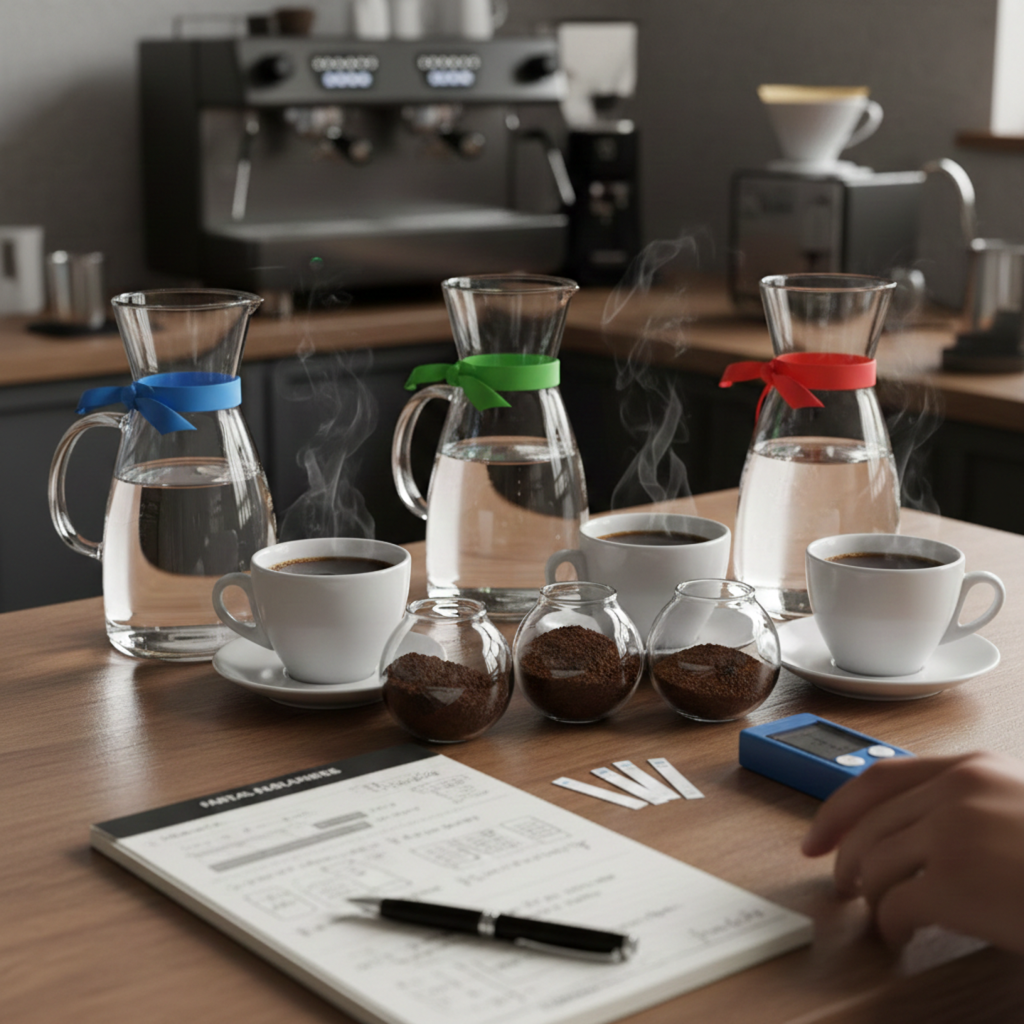
Within Trevi's internal experiments, three types of water were tested:
Softened water (30 ppm)
The coffee turns out too acidic, the brightness becomes sharp.
Extraction is weak, the body is watery.
Optimal water (80–120 ppm)
Balance of acidity and sweetness.
More pronounced aroma, soft aftertaste.
This type of water is the best suited for espresso.
Hard water (200+ ppm)
Bitterness increases, the taste becomes “rougher.”
Risk of rapid scale formation in the coffee machine.
The influence of pH on taste
The pH of water for coffee determines how acidic or alkaline the drink will be.
pH below 6.5 → coffee is too acidic, sometimes with metallic notes.
pH above 7.5 → coffee seems flat, deprived of aroma.
A study by the University of Bath (2020) showed that neutral pH has the highest ability to extract aromatic oils without distorting acidity.
Water filters: which option works best?
-
Home pitchers with filters
Maintain hardness at the level of 70–120 ppm.
Suitable for alternative brewing, espresso, and coffee machines.
-
Osmotic systems
Provide almost zero hardness.
It is necessary to additionally mineralize the water so that the coffee has flavor and not only acidity.
-
Carbon filters
Remove odors and chlorine well, but have little effect on hardness.
-
Professional filtration systems for coffee machines
The optimal option for coffee shops and offices.
Allow manual adjustment of hardness levels.
Studies that changed the approach to water in the coffee industry
Barista Hustle test (2018)
Baristas conducted experiments with different concentrations of magnesium and calcium.
Conclusion:
Magnesium extracts fruity notes better.
Calcium gives the drink a denser body.
SCA and Eurofins study (2020)
More than 30 water samples from different countries were compared.
Result:
The best balance — 90–120 ppm.
The ideal pH for espresso — 7.0–7.2.
Which water is best for espresso?
Summarizing Trevi’s research and practice:
✔ Total hardness: 80–120 ppm
✔ Alkalinity: 40 ppm
✔ pH: 6.8–7.2
✔ Minimum chlorine and impurities
Water for coffee with such parameters allows you to obtain stable taste, clean acidity, and good sweetness.
How to prepare coffee at home correctly: Trevi’s tips
Use a quality filter or softening system.
Do not boil water many times — minerals concentrate.
Check hardness with test strips at least once a month.
For espresso, it is better to use specialized or bottled water with low mineralization.
By the way, if you enjoy brewing at home, pay attention to Trevi ground coffee — it reveals itself especially well in medium-hard water.
Conclusion
The type of water can enhance or ruin the taste of even the best beans. Studies by SCA, MIT, and Barista Hustle confirm: the ideal water has balanced hardness, neutral pH, and a minimum of impurities. Using the right water, you will feel new shades of flavor, stability, and purity in every sip.
Trevi continues working on water tests and coffee profiles so that you receive maximum pleasure from each cup — at home, in the office, or in a coffee shop.
If you want to choose the ideal beans or get acquainted with the assortment, be sure to visit the main page of our website, where the coffee producer Trevi presents the freshest and most aromatic products.