Coffee is one of the world’s most beloved beverages. Yet what for many of us is a daily ritual and a source of inspiration, for farmers in tropical regions is a matter of survival.
Over the past decades, a worrying trend has emerged: climate change and coffee cultivation have become one of the most serious threats to the industry. Temperatures are rising, rainy seasons are becoming unpredictable, and pests and diseases are spreading to regions where they were previously unknown.
How Global Warming Affects Coffee Plantations
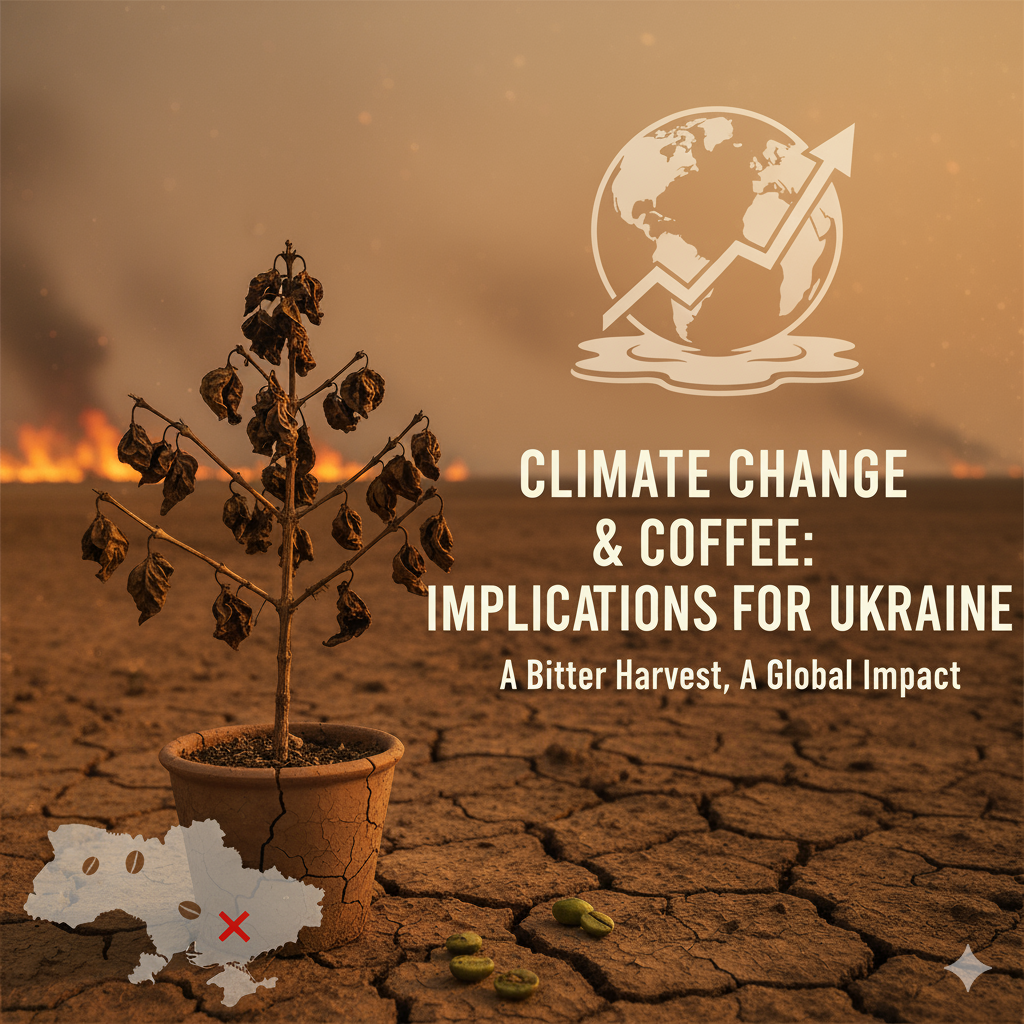
According to research by the Potsdam Institute for Climate Impact Research, by 2050 the area of land suitable for coffee cultivation may shrink by up to 50%.
The most vulnerable regions are the traditional coffee producers:
-
Brazil, the world’s largest producer of Arabica, is already facing lower yields due to droughts.
-
Ethiopia, the birthplace of coffee, risks losing part of its highland plantations because of unstable temperatures.
-
Colombia and Costa Rica are developing new varieties resistant to heat and fungal infections.
Climate change is forcing farmers to move their plantations higher up into the mountains—where temperatures still allow beans to grow with the desired quality. However, such land is limited, and competition for it continues to intensify.
How It Will Affect Coffee Prices and Quality
Fewer suitable lands and harsher weather conditions mean one thing: coffee is becoming more expensive.
Even now, global coffee exchanges react to poor harvests in Brazil or Colombia with sharp price fluctuations.
For consumers, this could mean:
-
higher prices for whole-bean and ground coffee;
-
potential decline in the quality of certain varieties;
-
reduced availability of premium Arabica, since it is harder to grow in hot climates.
According to the International Coffee Organization (ICO), if current trends continue, the average global price of coffee could rise by 20–30% in the next 10 years.
What This Means for Ukraine
Ukraine, as a coffee-importing country, directly depends on the stability of global coffee markets.
Thus, coffee import risks for Ukraine due to climate change are no longer theoretical—they are a reality that local producers and distributors already face.
For Ukrainian companies, including the Trevi brand, it is crucial to adapt early to these new conditions. This means:
-
diversifying suppliers (working with different countries to minimize the risk of crop failure in one region);
-
signing long-term contracts with farmers who use environmentally sustainable practices;
-
supporting Fair Trade, since farmers with stable incomes can invest in sustainable growing methods.
How Importers Are Responding — and What Consumers Can Do
Coffee importers around the world are increasingly funding research into climate-resilient coffee varieties and sustainable farming technologies.
For example, in Colombia, scientists have developed a new type of Arabica that can withstand higher temperatures without losing its flavor.
Such innovations are a chance to preserve the beloved aroma of coffee even under changing climatic conditions.
Consumers can also contribute to positive change.
By purchasing freshly roasted coffee, you support local producers who buy beans directly from farmers, reducing the carbon footprint of transportation and maintaining fair relationships along the supply chain.
Does Coffee Have a Future?
Yes — but it depends on the joint efforts of producers, researchers, and consumers.
Even today, farmers are turning to agroforestry, where coffee trees grow under the shade of taller plants, reducing soil temperature and retaining moisture.
They are also implementing rainwater collection systems, reducing pesticide use, and cultivating organic varieties.
Conclusion
Climate change is a challenge that unites the entire world. But at the same time, it’s an opportunity to make the coffee industry more responsible, sustainable, and ethical.
Ukraine, as an active participant in the global market, can not only adapt but also set an example of a conscious approach — from import and roasting to the final cup.
Every drop of coffee tells a story about the earth, people, and time. And if we take care of nature today, tomorrow it will reward us with the rich aroma of genuine Trevi coffee.