Most of us can't imagine our morning without an aromatic cup of coffee. We are accustomed to considering this drink a source of energy, a kind of "fuel" that helps us wake up. But have you ever wondered what actually happens in your body after that first sip? Why does anxiety sometimes replace the expected alertness, while other days bring euphoria and productivity?
The answer lies in the complex biochemistry of our body. Coffee and hormones are connected much more closely than it seems at first glance. Let's explore exactly how our favorite drink interacts with the endocrine system.
Why the Coffee Effect is Hormones at Work, Not "Magic"
The alertness from coffee isn't the addition of new external energy, but a skillful use of the body's own resources. The main active element—caffeine—is a master "imposter." Structurally, it is very similar to adenosine, a neurotransmitter that accumulates in the brain throughout the day and signals fatigue to the body.
When we drink high-quality coffee, such as freshly roasted beans from Trevi, caffeine molecules enter the brain and block adenosine receptors. The body simply stops "hearing" the fatigue signals. In response, the pituitary gland triggers a chain reaction, stimulating the production of hormones that mobilize our strength.
Which Hormones Caffeine Affects: A Brief Overview
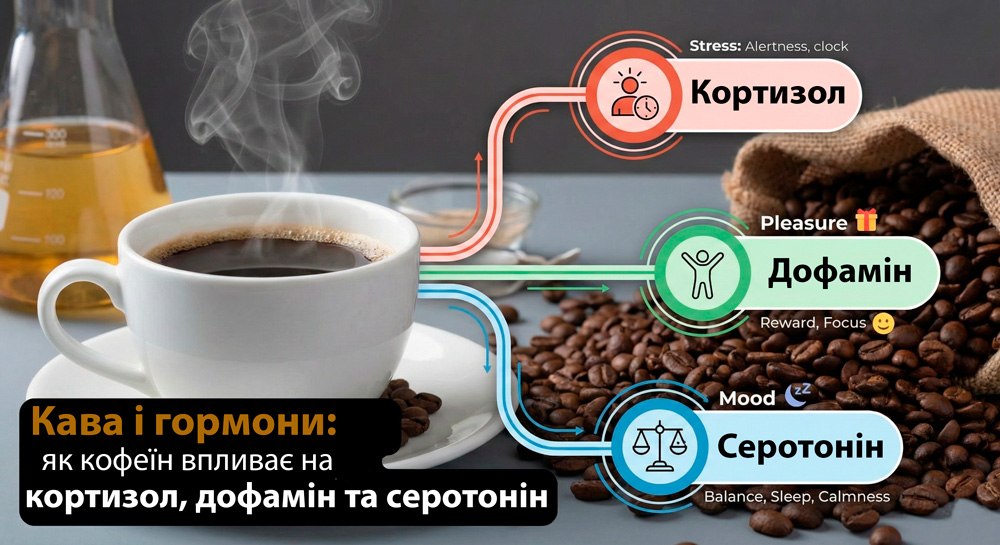
The impact of coffee is complex, but the key players on this field are:
-
Cortisol — the hormone of stress and awakening.
-
Dopamine — responsible for motivation and pleasure.
-
Serotonin — the mood regulator.
-
Adrenaline — the action hormone.
Caffeine and Cortisol: Perfect Timing Matters
Cortisol is often called the "stress hormone," but it is also the "awakening hormone." Its levels fluctuate naturally throughout the day, peaking between 8:00 and 9:00 AM (assuming a normal sleep schedule).
The connection between caffeine and cortisol is critically important for your well-being. If you drink coffee during the natural cortisol peak (immediately after waking up), you double the load on your adrenal glands. This can lead to:
-
Increased anxiety and hand tremors.
-
Rapid development of caffeine tolerance (coffee stops making you feel alert).
-
Disruption of circadian rhythms.
Tip: Scientists recommend drinking your first cup of coffee 60–90 minutes after waking up, when cortisol levels begin to drop. This ensures a smooth and lasting boost of energy.
Dopamine: Why We Love Coffee So Much
Have you noticed how your mood improves after just a few sips? That’s dopamine at work. Caffeine not only blocks fatigue but also increases the sensitivity of dopamine receptors. This creates a sense of satisfaction, boosts motivation, and improves cognitive functions.
Studies show that moderate coffee consumption can stimulate the brain's pleasure centers similarly to other stimulants, but in a much milder and safer way. It is thanks to dopamine that coffee helps us focus on complex tasks.
Coffee and Mood: The Fine Line of Serotonin
The tandem of coffee and mood also depends on serotonin. In moderate doses, caffeine can raise serotonin levels, making us more positive and socially active. However, moderation is key here.
Excessive caffeine consumption can deplete serotonin stores, leading to the opposite effect—irritability and a depressed state when the drink's effect wears off. Therefore, it is important to know your limit. For those looking for a convenient way to control portions and enjoy the taste anywhere, drip coffee is the ideal option, where the dosage has already been calibrated by professionals.
Adrenaline: "Fight or Flight" Mode
Caffeine stimulates the adrenal glands to release adrenaline. This leads to an increased heart rate, higher blood pressure, and increased blood flow to the muscles. That is why coffee is often drunk before workouts—it physically prepares the body for exertion. However, if you are sitting in an office, excess adrenaline can feel like internal tension.
Why Different People React to Coffee Differently
Why can your colleague drink an espresso before bed and sleep soundly, while a cup of latte after lunch causes you insomnia? The answer lies in genetics, specifically in the function of the CYP1A2 gene.
This gene is responsible for producing an enzyme in the liver that metabolizes (breaks down) caffeine. People can be divided into three groups:
-
Fast Metabolizers: The body breaks down caffeine instantly. They get a quick energy charge that passes just as quickly. The risk of side effects is minimal.
-
Moderate Metabolizers: The "golden mean."
-
Slow Metabolizers: Caffeine remains in the blood for a long time (up to 10 hours or more). In such people, there is an increased risk of heart palpitations and insomnia even from a single cup.
Conclusion
Coffee is a powerful biological tool that affects our hormonal system. Understanding the link between caffeine and cortisol, dopamine, and serotonin allows you to turn your habitual coffee drinking into a conscious ritual that brings not only pleasure but also benefits. Listen to your body, choose the right time for coffee, and enjoy a quality product.